
Explainer animation production

A good explanation is not a summary. It is a sequence.

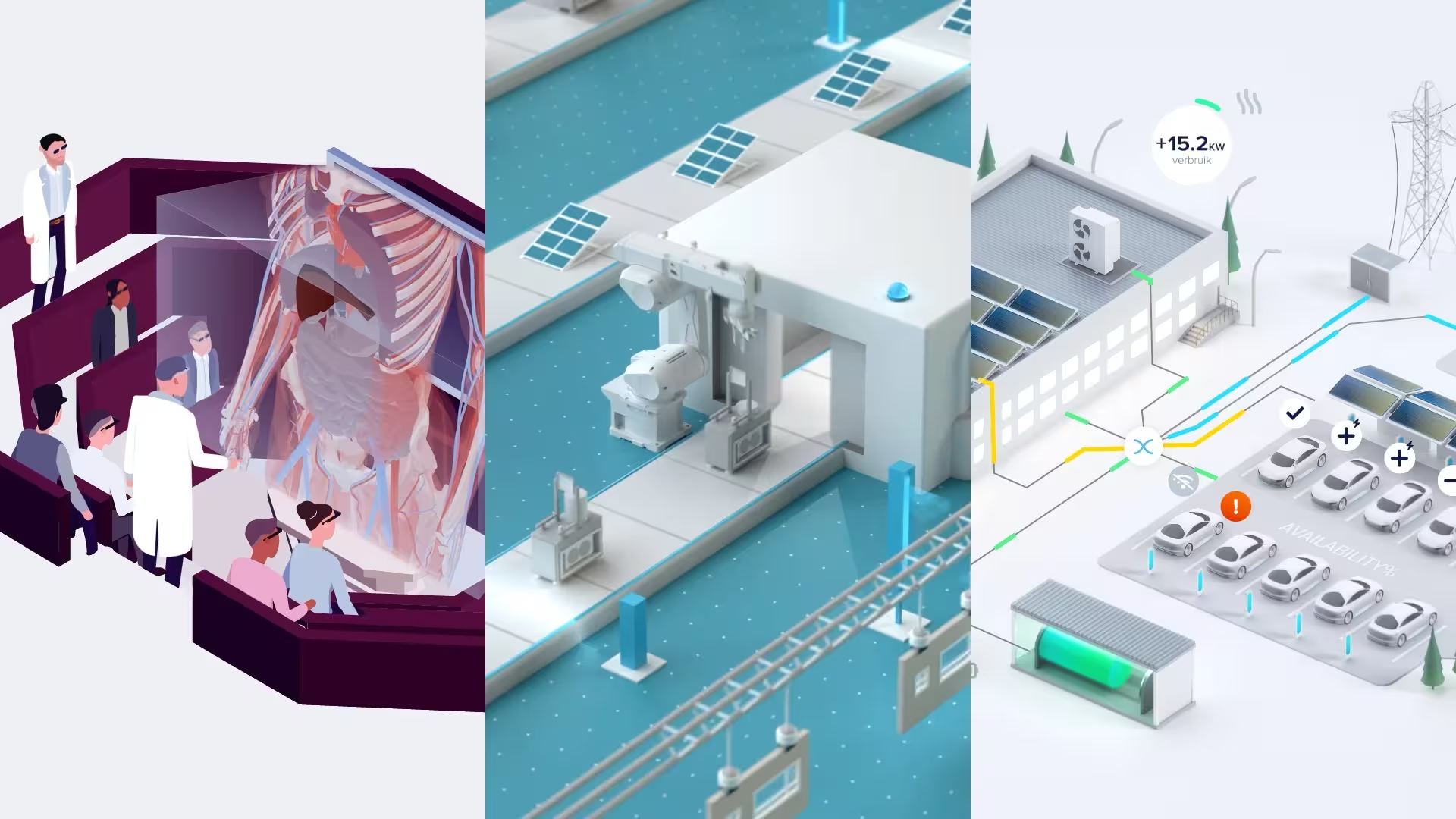
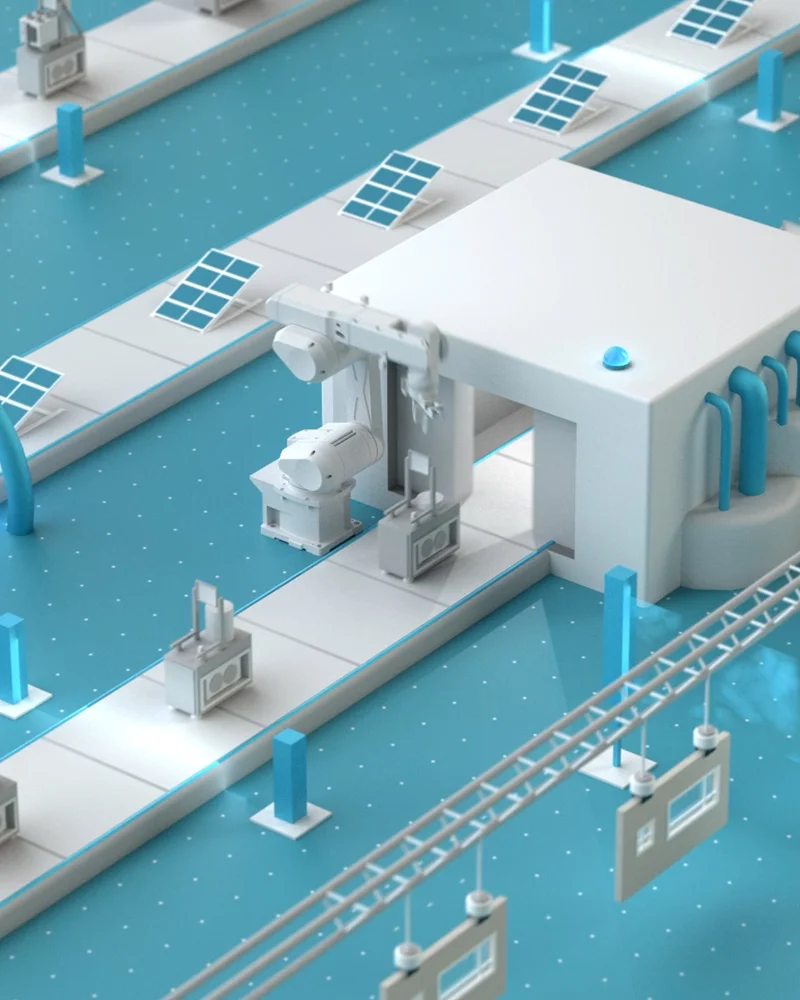
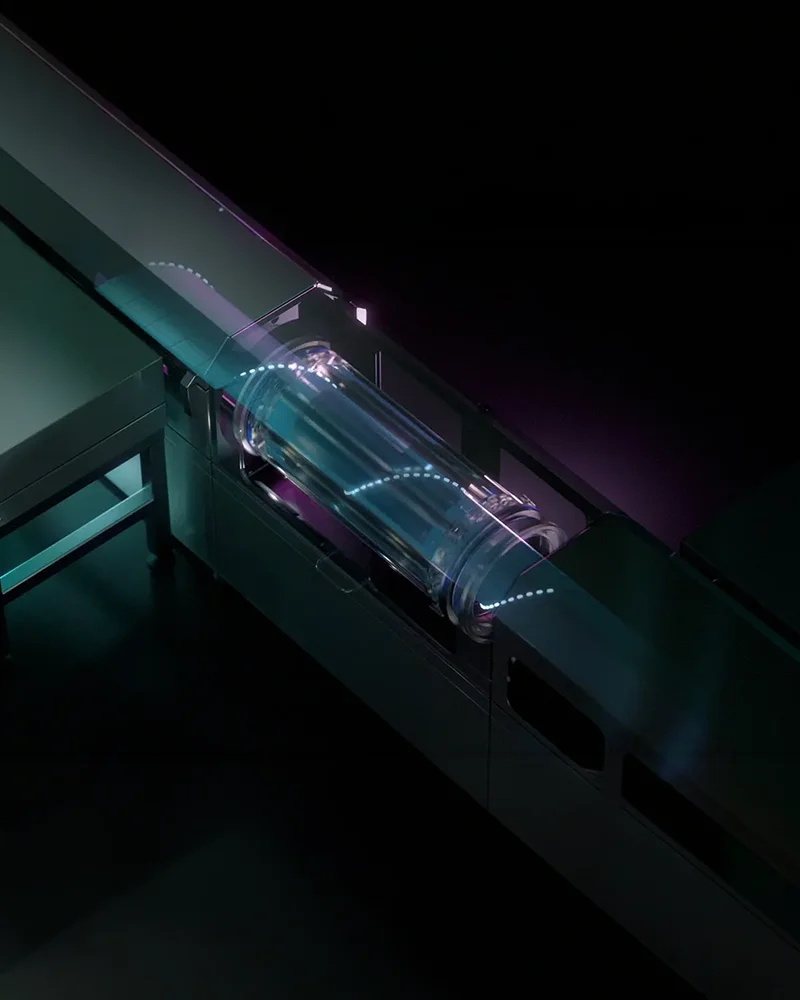
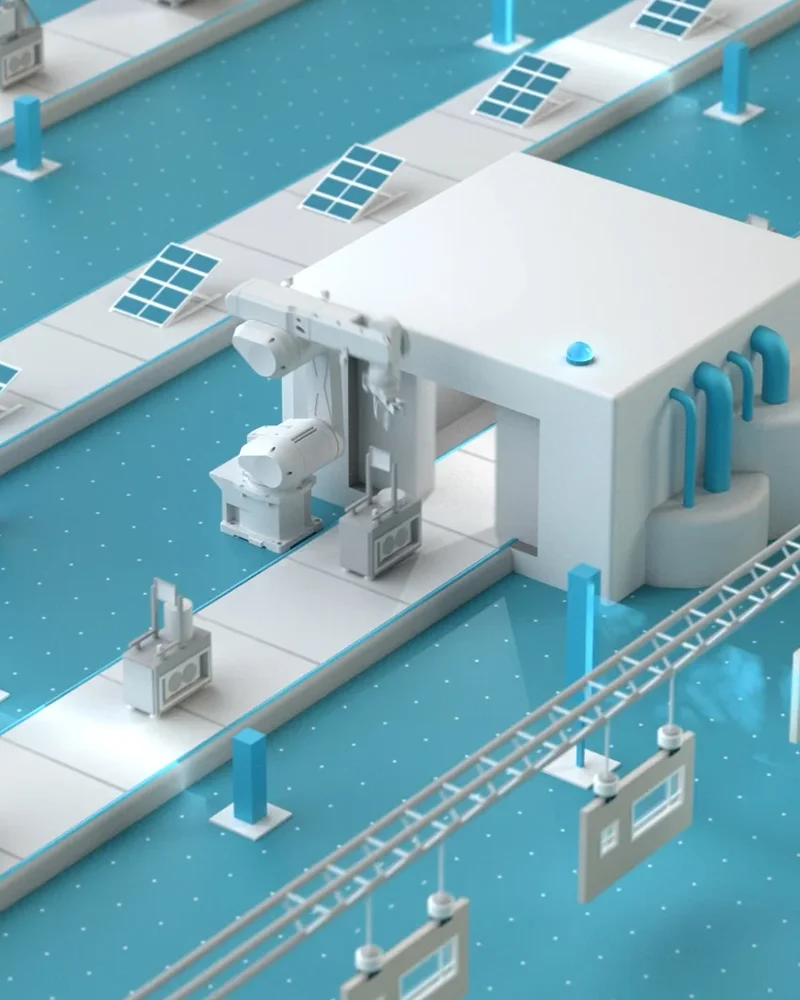
Three illustrations: on the left, doctors and an audience looking at a 3D skeleton projection; in the middle, an automated factory with robot arms; on the right, a smart car park with electric cars and solar panels.Model of a factory with a robot arm assembling parts on a conveyor belt, with solar panels and blue accents.

The sequence is the whole craft

An explainer animation stands or falls on its sequence. Not on the style, not on the voice, not on the number of seconds.

If you show step three before someone has accepted step two, they drop out and don't even know why. All they remember is that it was complicated. That is why, for Kalpana Systems, we started at atomic level, showed what Atomic Layer Deposition is, then what their variant does differently, and only at the end the machine. In reverse order, nobody would have understood the machine.

For Energiesprong the principle was the same, on a different scale. First an ordinary, outdated house that everyone can picture. Then, part by part, the facade elements, the solar panels and the installations. And only then the outcome: a home that generates as much energy as it uses. The viewer builds up the understanding along the way, instead of having to swallow it in one go.

Deciding that sequence is where we spend most of our time. It is also the part nobody sees in the end result, and that is exactly why it works.

If you can't say it in one sentence, you can't animate it

Before we design anything, there has to be one sentence that is right. What should the viewer understand afterwards that they don't understand now?

If that sentence can't be written, the problem is not visual but one of content. And then animation won't solve it either. It regularly happens that we only nail that sentence after two sessions. That feels slow. It is the difference between a film that explains something and a film that shows something.

So the scenario is not an intermediate step. It is the product. The animation is the way it is delivered.

Who are you actually explaining it to?

Almost every explainer animation that goes wrong makes two mistakes at once. It explains what the audience already knows, and it uses words the audience doesn't know.

That second one is usually called jargon, but jargon is not the problem. For a room full of shipbuilders, "zero-emission propulsion" is plain language. For a policymaker it is already a hurdle, and for the general public a wall. The problem is jargon that doesn't fit the audience, and that you no longer hear yourself because you work with it every day.

MARIN had exactly that challenge: the Zero Emission Lab had to be explained to the maritime sector and to politicians and the public. Two audiences with completely different prior knowledge. That is why in the first conversation we don't just decide what needs explaining, but above all to whom, and what that person already knows.

3D animation for MARIN's Zero Emission Lab with glowing green parts

Explaining is not selling

The moment an explainer animation starts selling, nobody believes the explanation any more. A shame, because trust was exactly what you wanted to build.

The strongest explainer animations also name the limits: what something doesn't do, who it isn't suitable for, what is still being researched. That costs one sentence and gives the rest of the film credibility. If you also want to sell, we prefer to make a separate, shorter version for that from the same production.

Illustration of a workspace with a desk, computer and red chairIllustration of a workspace with a desk, computer and red chair

What should your audience understand afterwards?

If you already have that sentence, send it along. If you don't have it yet, that is exactly where we start. You will hear from us within one working day.

Five explainer animations and
what they had to explain

What clients say about
working with us and the results

"Your fantastic artwork helped make our vision understandable! This was extremely valuable in our development process and greatly contributed to securing multiple investment rounds."

Jan Willem Heinen
Co-founder & CEO - Maeve Aerospace
maeve aviation

“We always enjoy working with you! From start to finish, there's excellent communication, clear agreements, and high-quality production. You're constantly contributing ideas to achieve the best possible result, both creatively and technically."

Dave Valk
Designer & Owner - PlusDrie
plusdrie

“By combining your animation skills with our audiovisual expertise, we'll elevate the creative concept to the next level. You'll also deliver the right assets and files on time, and we'll work together to meet the deadline!"

Wouter Kooken
Owner & Creative Director - Blickfänger
blickfanger

"Working with Studio Analoog was impressive! They are true experts in their field. The final product made a huge impact, which we were able to showcase to state officials and important customers."

Jelle Wigboldus
Global Marketeer - Westfalia Fruit
Westfalia Fruit logo
logo client
logo client
logo client
logo client
logo client
logo client
logo client
logo client

Where an explainer animation ends up

Website. Helping visitors understand what you do in one go, before they drop off.

Sales conversations. A short promo variant from the same production sparks interest. In the conversation itself you use the explainer animation to explain in more depth how something works.

Policy and public information. Energiesprong was explained to housing associations, builders and suppliers in several countries, and ended up in a PBS NewsHour report.

Internal support. Bringing colleagues and stakeholders along with a change, without everyone having to sit through the same presentation three times.

Investors and partners. Explaining an innovation to the people who need to believe in it before the product exists.

Events. On a trade show stand or during a presentation, often as a loop without sound.

Social media, but differently than you think. We don't post the full video on social. A short cut with one key question works better there, designed to bring the right viewer to your website, where the full explanation lives. For MARIN we made short versions like that with adapted text. The explainer animation itself sits where someone takes the time to watch it.

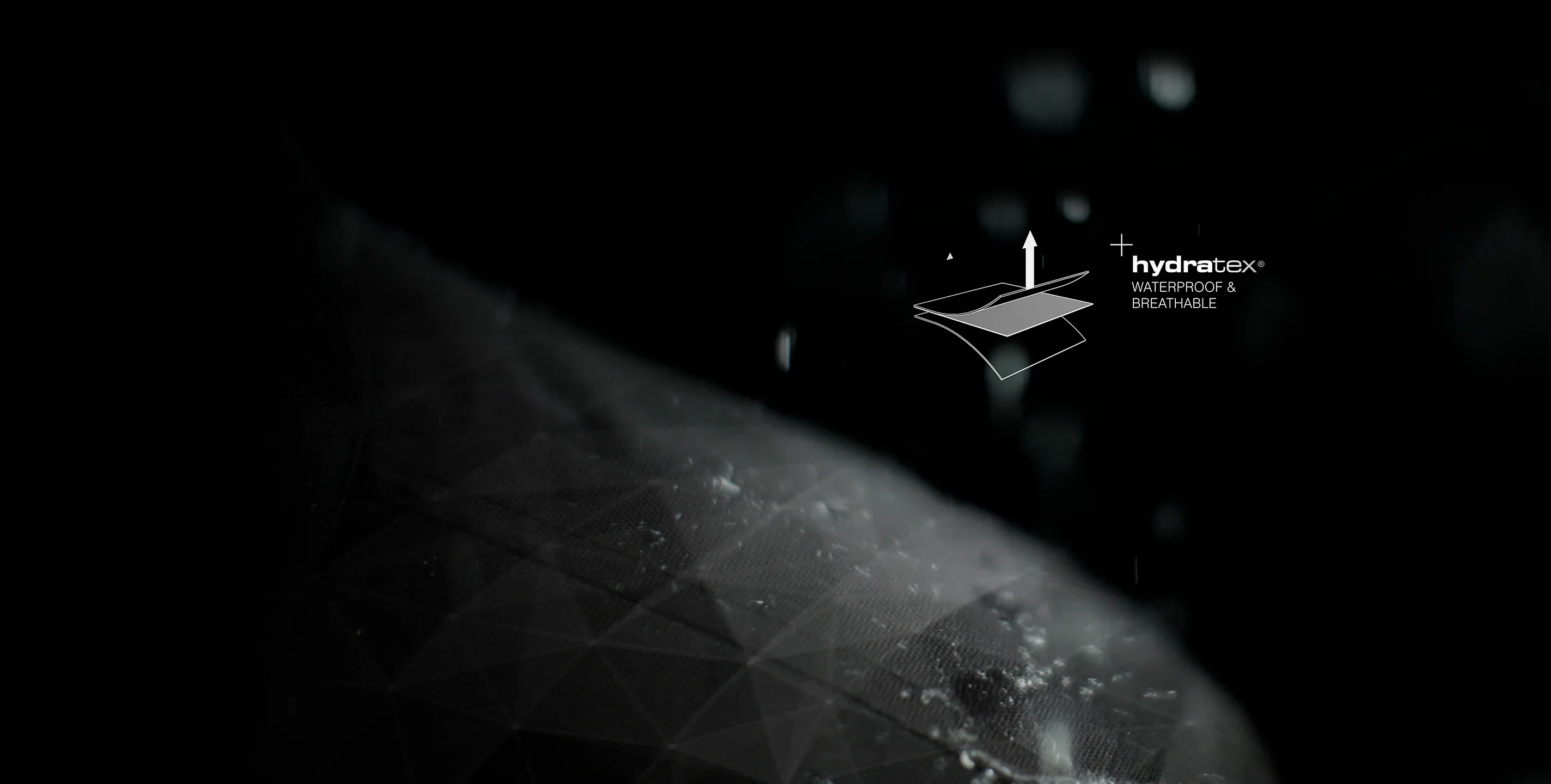
Close-up of water droplets on a waterproof, breathable fabric with the Hydratex logo.

What an explainer animation costs

That mainly depends on the choice between 2D and 3D. A process, service or idea usually lends itself to 2D, a product or technology usually to 3D.

2D explainer animation: from €10,000, 4 to 6 weeks

3D explainer animation: from €10,000, 6 to 10 weeks

Explainer animation with social cuts and language versions: €10,000 to €20,000 or more, 6 to 10 weeks

All prices exclude VAT. The concept and scenario are always included, because that is where most of the work lies.

Want to see the prices of all types of animation side by side? Take a look at animation production.

How an enquiry works with us

You will hear from us within one working day. Usually with a few questions, because a budget that makes sense doesn't come from a single email.

After that there are two routes. If you need a number now, we give a rough estimate based on what you have sent us. If you have half an hour, we discuss the project and you then receive a well-founded scope with a matching budget. The second route gives a better answer, and often a different project than you had in mind.

In a hurry? Feel free to call. We do the same the other way round.

How an explainer animation
comes together at our studio

Briefing

After your enquiry you will hear from us within one working day, usually with a few questions. Then we schedule an introduction. We focus straight away on the content and the context: what needs explaining, to whom, and where will the animation be used? Together we map out where the communication friction lies and which decision you want to speed up, whether that is sales, an investor presentation, onboarding or stakeholder communication. Based on that we make a proposal with a clear scope, timeline and budget, including options for reuse. Once approved, we get started.

Concept & storytelling

We translate the substance into a narrative: what does the viewer need to understand first, what comes next, and how do we build towards the core? This is the phase in which we do the most substantive sparring and lay the foundation for an animation that is logically structured. You receive a fully developed concept with core message, structure and tone of voice.

Kick-off

At the kick-off everyone involved sits at the table. We define the storyline, discuss the inspiration and ask each other questions: we about the content, you about the process. We agree the timeline, fix the feedback moments and agree who has a say and who bundles the feedback. That last agreement is the most important one of the whole project.

Storyboarding

The narrative is worked out visually in a storyboard. You see per scene what will appear on screen, how the structure flows and where the accents lie. This is the key moment to steer: changes here are fast and save costs further down the production.

Concept design

We develop the visual style: colour palette, atmosphere, level of detail and what the 3D models look like. This can range from hyper-realistic to abstract, depending on what suits the story and the brand. You receive style frames so you can see exactly which direction we are taking.

Production

The 3D scenes are built, animated and rendered. Because the substantive choices have already been made, this phase remains manageable and predictable. You receive interim previews, so we can adjust together if needed.

Sound

Music, sound effects and any voice-over are added. This largely determines the sense of professionalism and pacing. Good sound makes a significant difference in how an animation comes across and holds attention.

Release

The animation is delivered in the agreed formats and resolutions, ready for deployment. If agreed, we also deliver variants (stills, cutdowns, platform formats) and advise on the best deployment per channel.

Where explainer animations go wrong

Wanting to explain everything. The whole story in one film, with every nuance included. The result is that nothing sticks. An explainer animation explains one thing well, and refers elsewhere for the rest.

No clear audience. Made for everyone, and therefore for no one. See above.

Jargon that doesn't fit the audience. Not the technical term itself, but the technical term for the wrong audience.

A voice-over that says what you can already see. Or an animation that leans entirely on the voice-over. Image and voice should complement each other: the voice tells what the image cannot show, and the image shows what the voice doesn't need to say.

All four have the same cause: production started before the story was in place. A good explainer animation starts with storytelling based on research into the audience, the client and the product. The rest follows from that.

Frequently asked questions about explainer animations

expand black

What does an explainer animation cost?

expand black

How long should an explainer animation be?

expand black

How long does it take?

expand black

Do you write the script?

expand black

Can it include technical jargon?

expand black

Does it need a voice-over?

expand black

Can you also build the explainer animation into a website?

expand black

Do you also work for agencies?